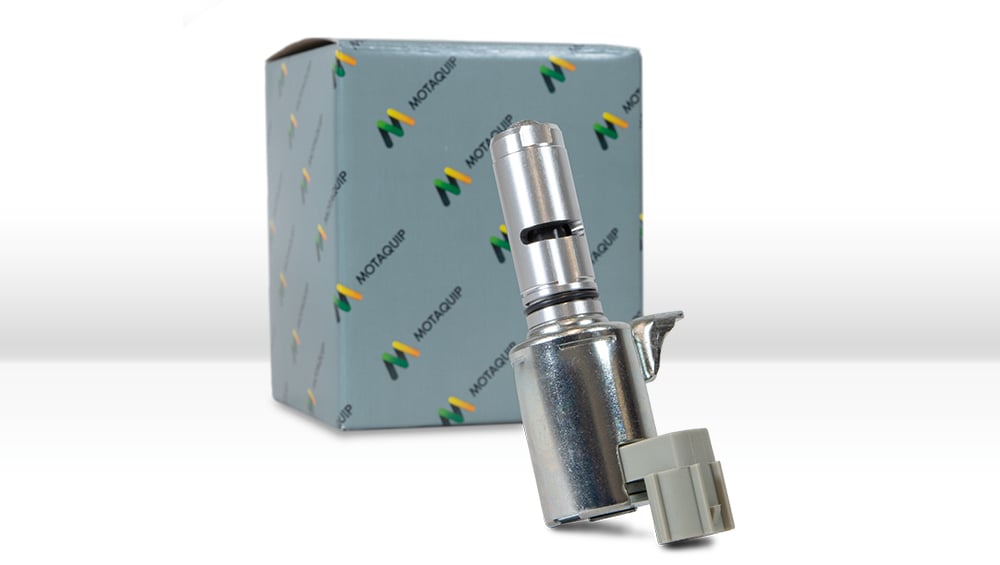
The VVT Solenoid plays an important role in adjusting camshaft timing to optimise performance, fuel efficiency, and emissions across a wide range of driving conditions.
Motaquip’s VVT solenoids are manufactured using high-quality components to resist premature failure, reduce wear, and extend service life.
VVT solenoids are known wear-and-tear items, and given their mechanical, hydraulic, and electronic, can fail due to:
- Oil-related issues – Poor quality, contaminated, or incorrect oil can cause sluggish or seized valves. Often linked to missed servicing intervals.
- Electrical faults – Wiring damage or poor connections can disrupt signal delivery.
- Component wear – Over time, seals and internal parts degrade, impacting performance.
Motaquip recommends technicians should stay alert to the following indicators of a faulty camshaft control valve:
- Check engine light – a commonly showing fault code is P0011
- Rough idle or stalling – the valve may stick in a retarded position
- Flat acceleration or misfires – disrupted cam timing affects smooth running
- Poor mileage per gallon (MPG) – fuel economy drops as efficiency is lost
- General drivability issues – inconsistent performance across the rev range
To accurately identify solenoid-related faults, Motaquip recommends the following steps:
- Check for error codes – use an OBD2 diagnostic scanner to to check for codes in the engine control unit (ECU).
- Visual inspection – look for oil leaks, corrosion, or broken connectors
- Multimeter test – verify resistance and signal function of the solenoid
Motaquip currently offers 15 VVT solenoid references covering a wide range of fast-moving applications. As demand grows, so will the coverage to ensure motor factors and technicians have what they need, when they need it.
Click the feature link below to download a copy of this TecTalk.