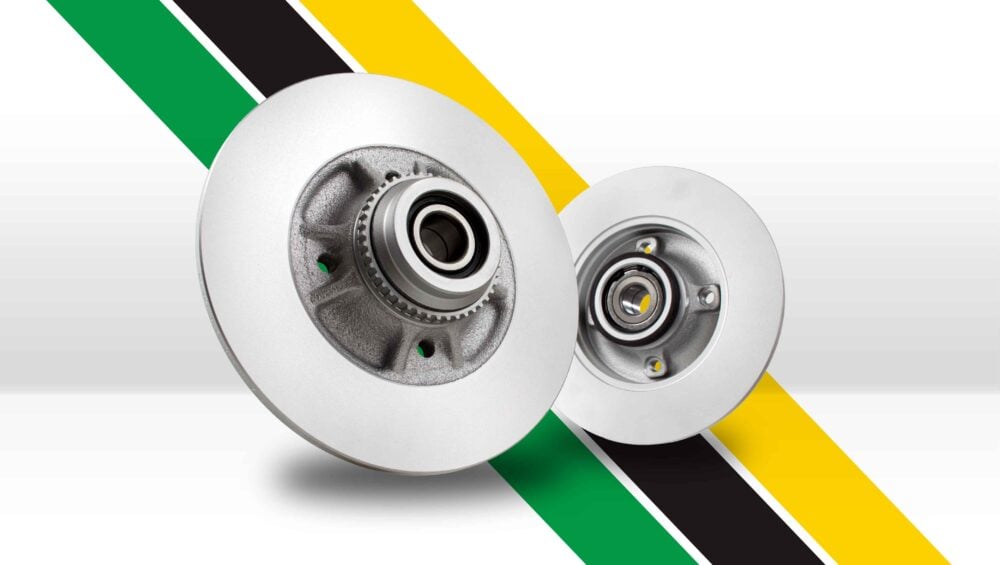
Within the Motaquip brake disc range, a number of applications feature integrated ABS rings. This design is widely used on Citroën and Peugeot vehicles, but is associated with a recurring fitment issue relating to the interaction between the ABS ring and the sensor.
The Installation Fault
When correctly fitted, there should be a precise ‘air gap’ between the brake disc’s ABS ring and the vehicle’s ABS sensor. However, corrosion around the mounting point can force the sensor out of position. When a new disc is installed under these conditions, the air gap is eliminated, causing the ABS ring and sensor to make contact creating damage.
Fault Diagnosis
This problem may occasionally be detected through a visual inspection prior to disassembly, but there are other symptoms to consider.
- One common indication is the occurrence of ABS system errors when installing the new disc. If the ABS ring and sensor come into direct contact, they will fail to function correctly or communicate with the vehicle’s ABS system.
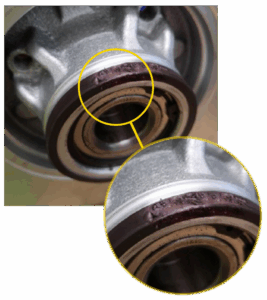
- Additionally, a misaligned ABS sensor on the mounting point can cause visible damage to the ABS ring on the disc being replaced. The image (see right) demonstrates the typical damage you can expect to find.
Recommended Solution
In order to avoid potential future issues, technicians are encouraged to adhere to the following steps. This will facilitate accurate installation, preserve the integrity of the ABS system, and minimise part returns:
- Remove the ABS sensor from the vehicle.
- Remove any corrosion from the sensor mounting point. If the sensor is installed within a guide tube, remove the sensor from the tube and remove any corrosion that is present.
- Check the ABS sensor for damage and replace if required. The original sensor can be safely re-installed if there are no visible signs of damage.
- Install the new brake disc ensuring correct air gap between ABS sensor and ABS ring.
- Check to ensure proper function of vehicle ABS system.
For future quick reference, please download a copy of this bulletin below.