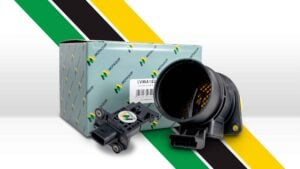
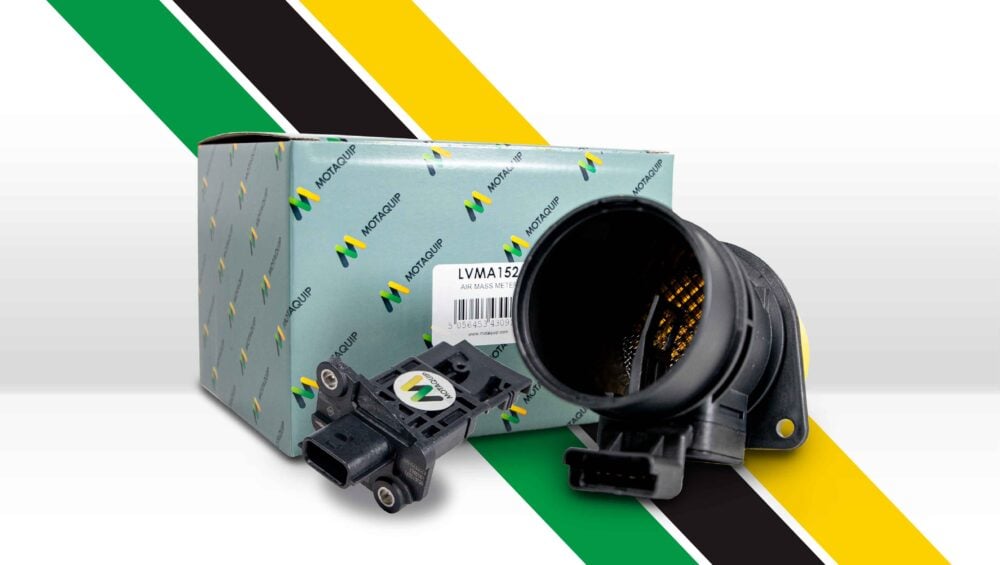
The Air Mass Meter (AMM) is a vital part of the engine management system. Its job is to measure the volume of air entering the engine and relay that information to the Engine Control Unit (ECU). With this data, the ECU can accurately calculate engine load and deliver the correct amount of fuel while adjusting ignition timing for optimum performance.
At the heart of the AMM is a fine platinum sensor kept at a constant temperature. As air flows across it, the element cools, and the system compensates by supplying more current to maintain the set temperature. This current demand is then converted into a signal the ECU can interpret.
Many AMMs also feature an additional ambient air temperature sensor, which corrects the signal to account for temperature variations, which is an important factor since air density and temperature directly influence engine performance.
Symptoms of faulty Air Mass Meters
Diagnosing faults based on symptoms alone can be difficult due to other faulty components such as Fuel Pump, Fuel Pressure Regulator and Vacuum System presenting similar symptoms. Accurate diagnosis is key before replacing parts unnecessarily.
The following symptoms could indicate faulty AMM’s:
- Noticeable drop in engine power
- Engine vibration or poor idling
- Reduced fuel economy
- Hesitation or stalling under acceleration
- Surging or fluctuating idle speed
- Diagnostic fault codes
Diagnosing the Fault
Keeping the AMM in good condition and knowing how to diagnose faults ensures engines run exactly as it should.
Air Mass Meters can be checked with a voltmeter (0–5V). On ignition, the output voltage should rise with idle airflow, increase smoothly as the engine revs, and drop again when it returns to idle.
If the voltage remains steady or unresponsive, the sensor is likely faulty. However, many modern vehicles use digital AMMs that output waveforms rather than voltage. These are more sensitive and responsive but require an oscilloscope for proper testing.
Speak to your Area Sales Manager for more information about Motaquip’s Air Mass Meters or Engine Management range.
Click the feature link below to download a copy of this TecTalk.