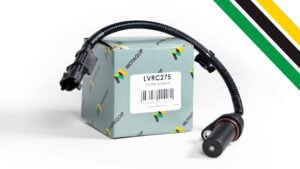
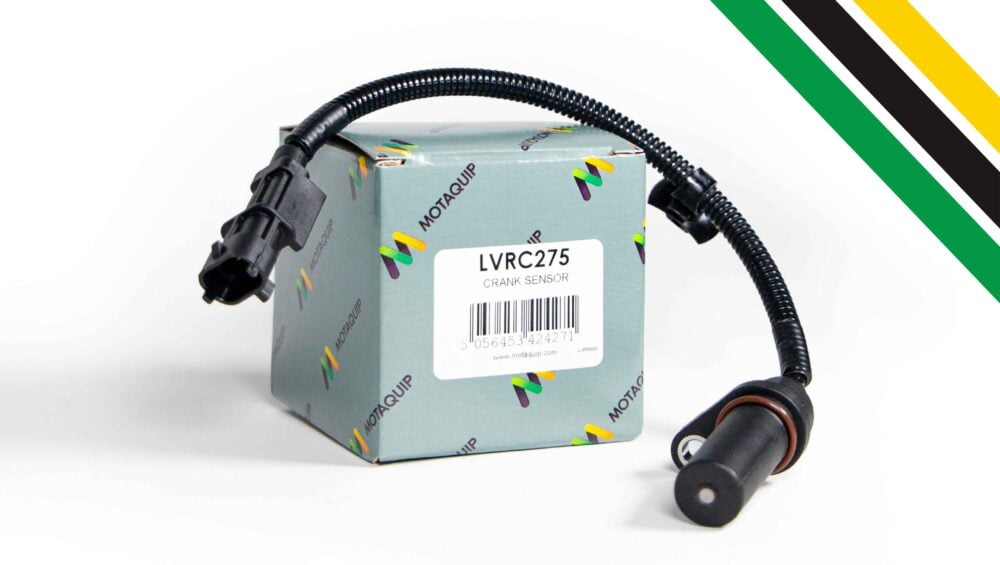
A crankshaft sensor plays a central role in the precision timing of a modern engine. By monitoring the position and rotational speed of the crankshaft, it enables the ECU to calculate correct fuelling, ignition timing, and other essential parameters.
When this sensor begins to fail, the ECU cannot maintain correct engine timing, which leads to poor performance and drivability, and potential no‑start conditions. If left unresolved, further component damage may occur.
Causes of Crankshaft Sensor Failure
There are many reasons why a crankshaft sensor may fail including:
- Sensor Age
Over time, the sensor’s internal magnet can weaken, reducing its ability to generate a clean, accurate signal for the ECU. - Faulty, Loose, or Damaged Wiring
Chafed insulation, corroded terminals, or weak connections can interrupt signal transmission and cause erratic engine behaviour. - Physical Sensor Damage
Debris, road impact, or interference from nearby components may crack, bend, or internally damage the sensor assembly.
Symptoms of Crankshaft Sensor Failure
A failing sensor can present several clear warning signs and should be investigated should any of the following symptoms appear:
- Engine management light illuminated
- Uneven or unsteady acceleration
- Misfiring or engine vibration
- Difficult or failed starting
- Limp‑mode activation
These symptoms may appear intermittently or worsen gradually as the sensor’s performance deteriorates.
The Motaquip Solution
Motaquip currently offers 96 crankshaft sensor references, each backed by a 3‑Year / 36,000‑mile warranty, providing technicians with reliable, OE‑matched quality components for long‑lasting performance.
Speak to your Area Sales Manager for more information about Motaquip’s crankshaft sensors or Engine Management range.
Click the feature link below to download a copy of this TecTalk.