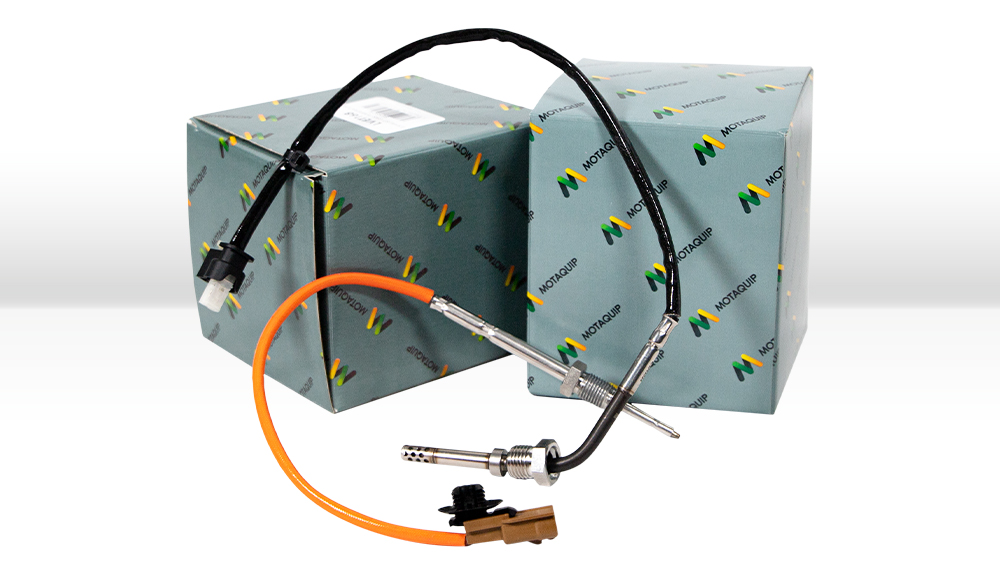
An Exhaust Gas Temperature Sensor (EGTS) helps regulate the exhaust system by measuring the temperature of the exhaust gases and transmitting this data to the engine control unit, which then adjusts engine performance accordingly. In petrol vehicles, the EGTS shields key components from from high temperature heat, whilst in diesel vehicles, the EGTS reduces emissions whilst optimising DPF regeneration.
There are tell tale signs of a EGTS failure which, if left undetected would result in inaccurate ECU data, non-compliant emissions and potential high car part-replacement costs.
Motaquip recommends technicians take prompt action if the following symptoms of a faulty EGTS are identified:
- Engine management light illuminated
- Poor fuel efficiency
- Failed emissions test
- Unnecessary DPF regeneration
EGTS failure can be caused by a number of factors including extreme temperatures above 900°C, wiring damage and engine fluid contamination. To troubleshoot an EGTS, Motaquip recommends:
- Reading engine fault codes using diagnostic tools
- Conduct visual inspections of the sensors for signs of corrosion or loose connections
- Inspect wiring checking for signs of breaks or damage
- Inspect EGTS for build-up of contaminants and clean if required
Click the feature link below to download a copy of how to identify signs of a faulty EGTS.